
The 1970s. A very interesting decade regarding the style of film-making (though I believe 1967-1969 should be included as a part of it). A respectable portion of films have an element of rawness to it that is distinct from any other decade. I like to think of it as the teenage years of film-making before slightly maturing into the young-adult years of the 1980s decade (which then regressed into some unique and strange immature funky 1990s decade that was its own thing). But I’m getting side-tracked here.
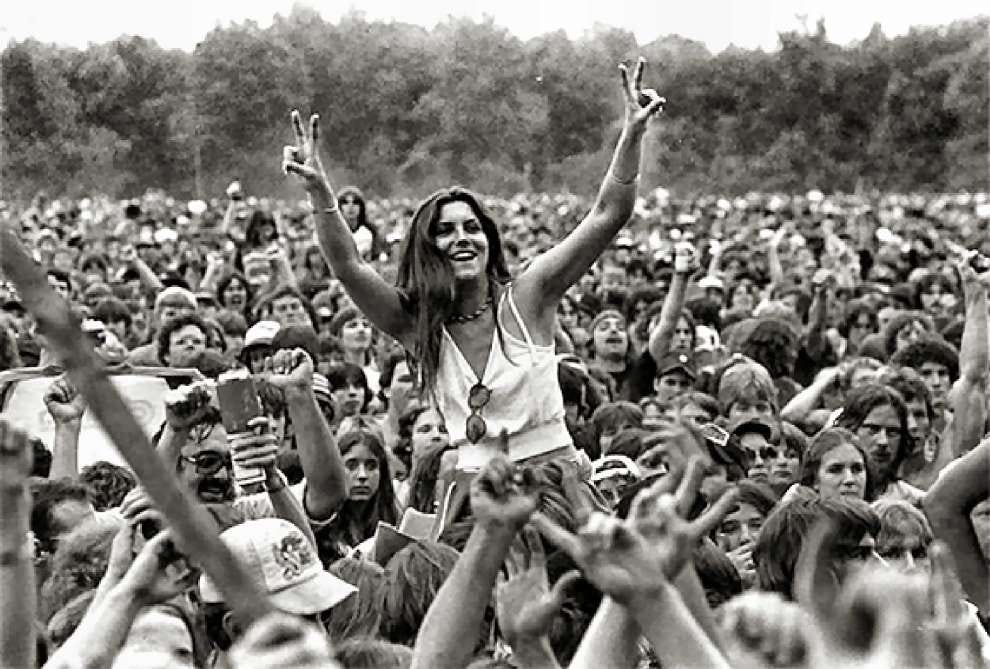
The thing about the 70s was that it had the decency to not be obvious and blunt about the messages it was putting out with each respective film. You had to be intelligent and perceptive to catch onto the subliminal messaging that went along with the raw reality feel of it. Because unlike films today, they don’t bash you over the head with the messaging. The filmmakers take it for granted that intelligent audiences exist and soaked in the films that were released. And such audiences did exist, because the USA was still clearly majority white. It was starting to get drug infused and hippie influenced and more willing to take in controversial subject matter regarding sex violence drugs and rock and roll (at least music had a tune back then that was anything but auto), but it still had intelligent white minds that weren’t battered down and melted into the pot entirely just yet.
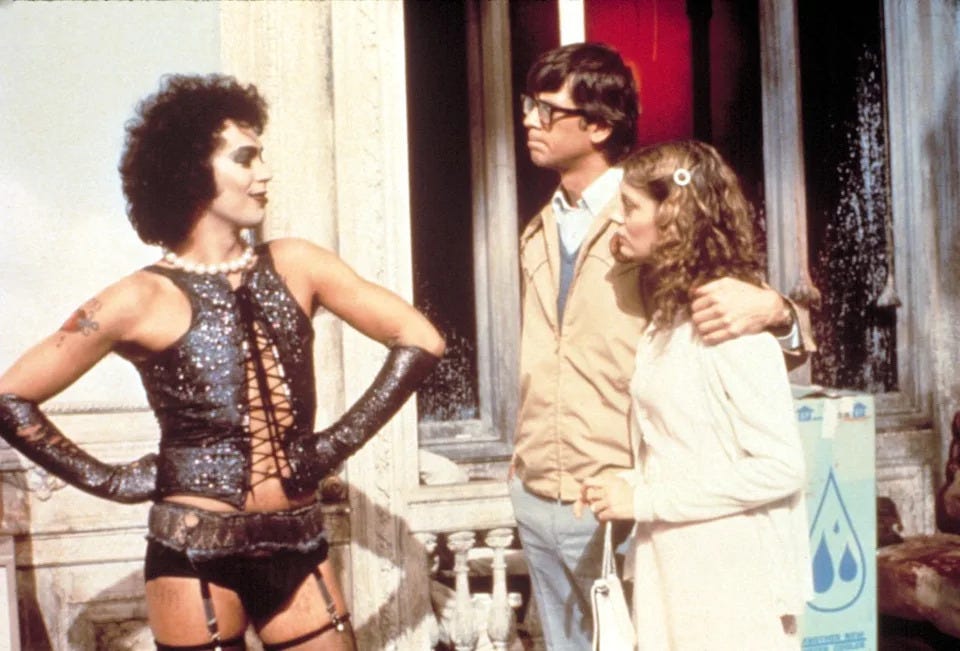
It was also a time when the public became aware that the government was full of shit. From the military atrocities that were broadcast during the Vietnam War (as opposed to those obscured during WWII), the Pentagon Papers, showing that politicians were willing to lie and steal via the Watergate scandal. So if they were lied to during the sanitary decades of the Hays Code of the mid-1930s to the early-1960s, why not rebel and look into stuff they were told to keep away from? The imagery of innocent and moral well-intended America that wished to improve the world… cracked. That America wasn’t as pure and innocent as they were led to believe, in spite of some voices that tried to tell them as much during those decades (and earlier).
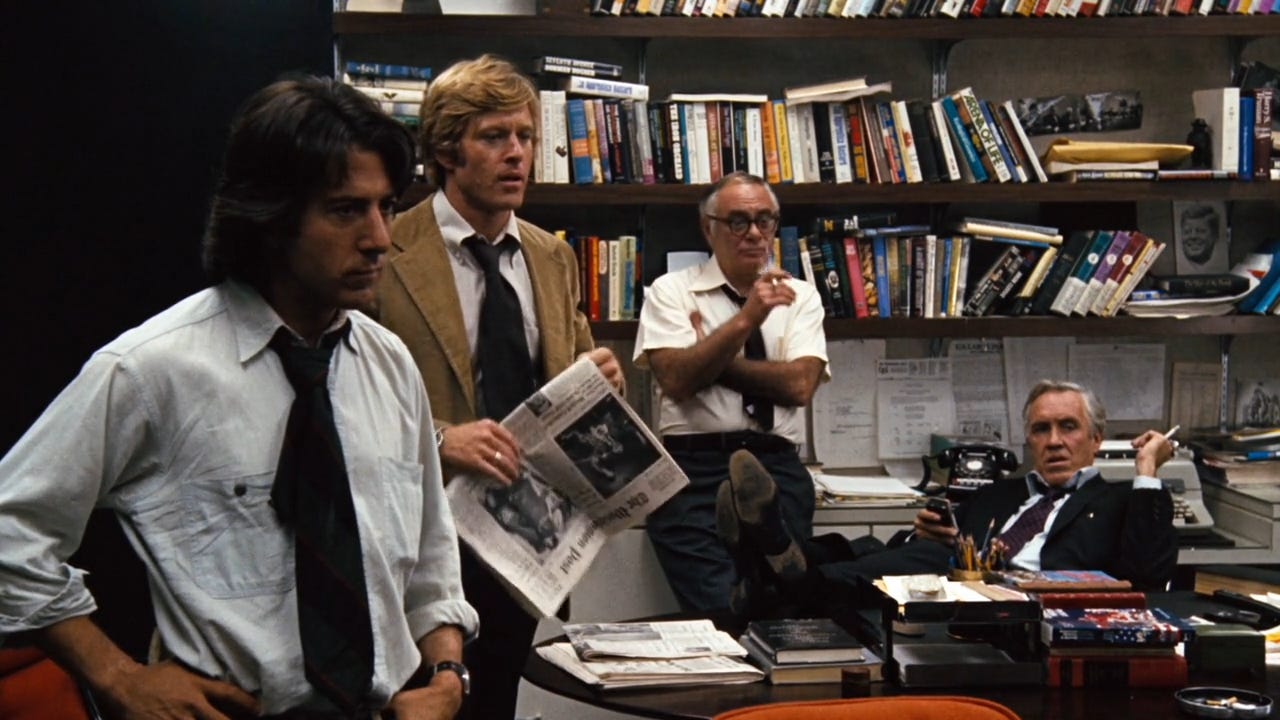
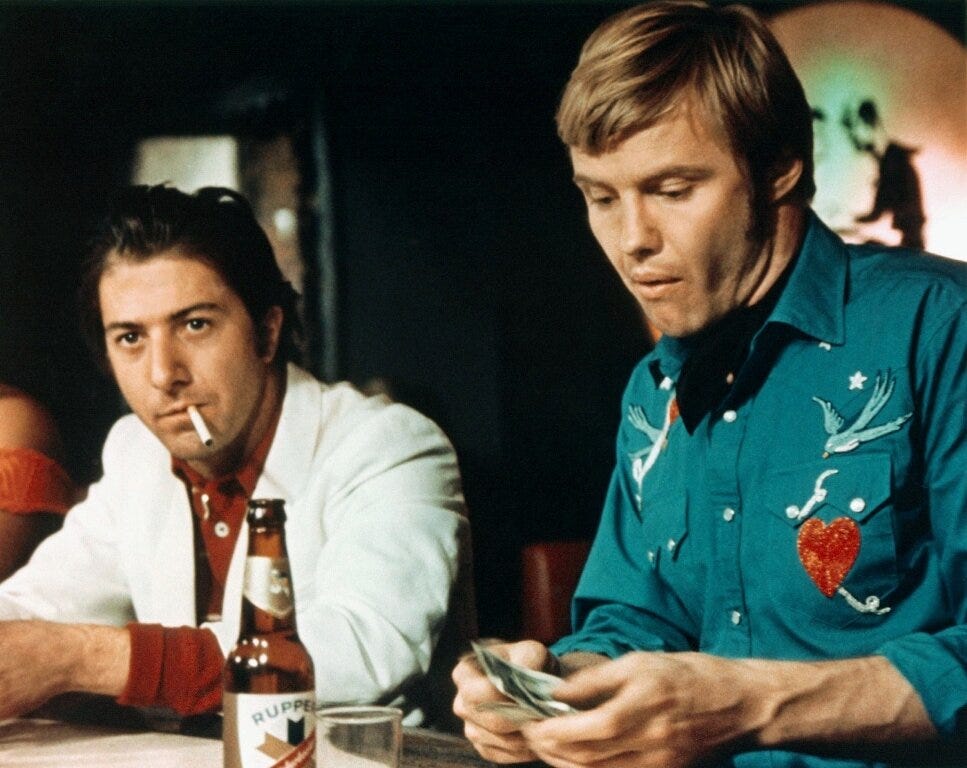
Thus it became ripe for the once taboo and controversial subject matter of films like Midnight Cowboy (1969) and Pretty Baby (1977). In this case, showcasing prostitution of the male and of the pre-teen female. You can make an argument that the former showcases the harsh reality of male prostitution and why it’s a bad thing, but it’s a bit more difficult to make that argument with how the latter is showcased. But even if you were to make the argument for the former, that certainly didn’t stop it from becoming a subject forbidden from being shown later (see My Own Private Idaho, 1991) until it gradually became more of something to be accepted rather than something to be shunned (see anything with the past 20 faggoty-ass decades, like True Blood, or Six Feet Under, and Tangerine for you tranny-lovers). Now the latter, that took longer, of course. It’s only a matter of time (I wouldn’t even give it 5 years) before that gets its film or show that normalizes it into something that’s pretty much accepted, which Cuties (2020) is encroaching upon in its own way (not a film I have seen, and don’t want to see).
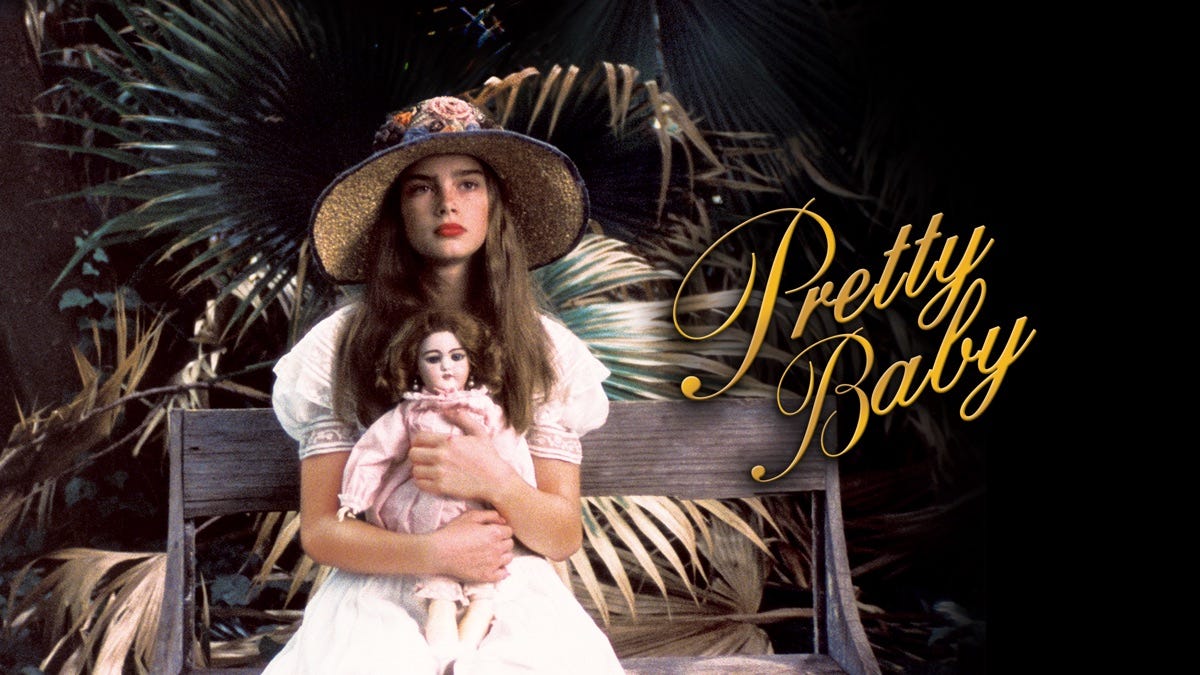
That all said, Pretty Baby pretty much went about as far as the subject matter can be taken without going into full-blown explicit underage sex scenes (with an 11-12 year old Brooke Shields). Not to mention I wouldn’t exactly say the film went in the direction of showcasing how terrible of a thing prostitution is. You could argue that it’s showcasing “just the everyday life of a brothel during the 1910s,” but that just raises the question, “Yeah, but why would you do that?” If the film had ended about halfway through its runtime, after the auction, and after she’s making an attempt to joke about her first experience while holding back the crying with laughter, it might’ve been a decent enough (albeit still questionable) flick. But it wants to have its cake and eat it too. It goes through all this shit with showing underage nudity, having her become comfortable with having sex with men at her young age, breaking down the viewer’s culture shock barrier (mine has been shattered and destroyed long ago, I only have logic to keep me reigned in on most of this stuff) at attempting to normalize underage sex… and then wraps it up with an ending that’s all like, “Oh yeah, and children should have a normal life away from all this after all… in case you have forgotten.” Which is hardly enough to remove that malicious seed that has been planted by the jewish director to attempt to normalize the shit that goes on behind the scenes everyday in Hollywood. It has even been argued that 2nd wave feminism is in-part responsible for this sexualization of little girls due to the movement of women’s liberation, as is argued early in the first part of the miniseries Pretty Baby: Brooke Shields (2023).
But it’s too much of a can of worms to open for me to dig into the real life stuff surrounding films like these… the director’s intentions, what happened to the actors and actresses during the making of the film, backgrounds, consequences, etc. It’s difficult enough to figure that out for the film that arguably started this whole thing, Child Bride (1938), which has the lesson that child marriage is bad… but it also wants to show underage nudity via the swimming in the lake sequence. I’ve gotten mixed messages over whether the child actress in that film was taken advantage of, or if she was more harrassed by the people trying to get her to acknowledge that she was abused (which she may not have been). It’s too speculative and I’d rather just stick with the lessons and emotions the films themselves are trying to evoke. We all know that Hollywood tends to destroy the lives of child actors (let alone the adult actors), so let’s just leave it at that. Though I will say this: from what I’ve gathered, it tends to be the mother who puts their daughters into roles like these rather than the father, assuming there even was one and there wasn’t already a divorce (which was also a rising trend during the 1970s). Single mothers suck (unfortunate widows aside), and so does the justice system that promotes them. And don’t let the feminist bitches in that Brooke Shields miniseries fool you (anyone in the know will see right through their feminist wily words); they try to blame the mysoginists for attacking the mother of Shields for putting her daughter into a role like that, while failing to acknowledge that, well, the questionable subject matter and explicit stuff the child must be exposed to and do herself for such a role. So yeah, bunch of radical feminist bitches.
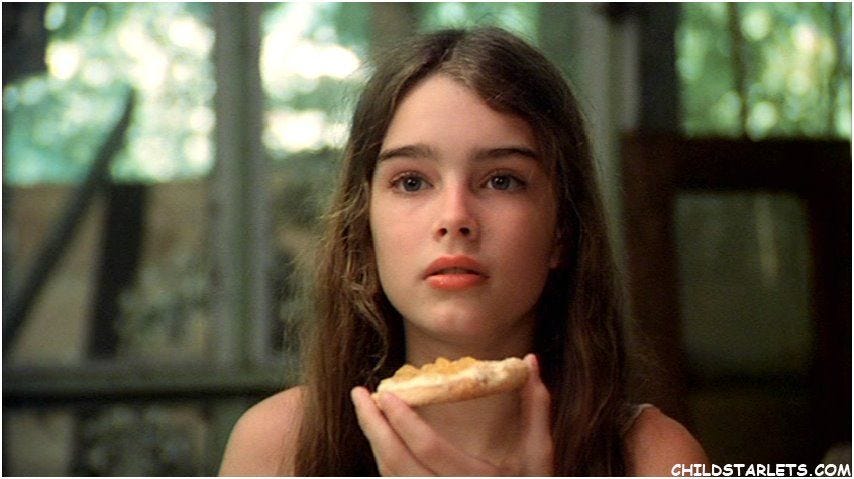
So here’s the thing about that ending. It’s ending on a note of, “Can she have a normal youthful childhood life after all she’s been through?” Her (ex-prostitute) mother takes her away from her adult husband… yep, we get that kind of marriage event that happens, as a reminder that this used to be a thing, as that film Child Bride existed to protest against, albeit I suspect as an excuse to show off some underage nudity in its own way, like how a film can get away with sinning and sinners so long as it’s biblical and shows them getting punished via some silent film showcasing Noah’s flood, But back on track, this happens so that we are deprived of an ending where the child winds up with an adult, to ask the question, “Will her life be good with him after all this?” At least it would have the decency to go all the way with the topics it brought up (which at least A Menina do Lado managed to do rather than just pussyfoot around the subject; if you’re going to be pushing the idea that there are upsides to an erotic age-gap relationship, you could at least go all the way with it rather be a hypocrite who feigns insincere decency after all else that has happened). Because when it comes to answering the former question, regarding her having a normal life in a normal setting away from the prostitution and eroticism, in this day and age, I’d say the answer is generally no. There are plenty of real-life examples to go with that, such as most child-star actors, especially those in Disney films. Are there exceptions? Sure, but they’re generally considered to be lucky and have dodged a bullet and thankful to have mitigated the destructive influence of Hollywood.
But answering the question of the child being well-off married to the adult… that can be more interesting. It’s generally not a consideration these days given all the bad that has been happening with young teens these days (let alone the past couple decades). But if we’re going to get historical like this film has, then it could take into consideration child marriages that tended to occur in North America between the 1890s and early 1930s. It dropped off during the Great Depression, and was eventually eliminated due to laws being passed, which got a start in the 1920s in various states, and became official nationwide during the 1970s; coincidentally enough in the decade when this film was released. It’s not a matter of all these marriages being a terrible thing for the children; it’s a matter of how often it ended up working out, with the underage girl growing up into a respectable adult, bearing children, and raising a respectable family with the father. Obviously this outcome wasn’t always the case, but that was an outcome a respectable portion of the time. It’s taboo to be considered, the times and demographics are different, and there are too many deviants and irresponsible parents who would carelessly give their child away to a deviant who would be in it more for lust than love. … But anyway, the film doesn’t do that, so it’s less interesting as a result, and it doesn’t do enough to showcase the harmful effects of (underage) prostitution to be considered a good film. It may be a well-shot and well-constructed film, but the moral lessons it offers are questionable at best.
If you want a film that takes a pro-age-difference relationship stance, go see A Menina do Lado. It’s not perfect, doesn’t go far enough into the cons that are to be had from that kind of relationship, there’s some subtle pro-faggotry thrown in for good measure, too convenient with some of the setups that happen, but at least it goes all the way with the message and stays sincere about it without hypocrisy.

