
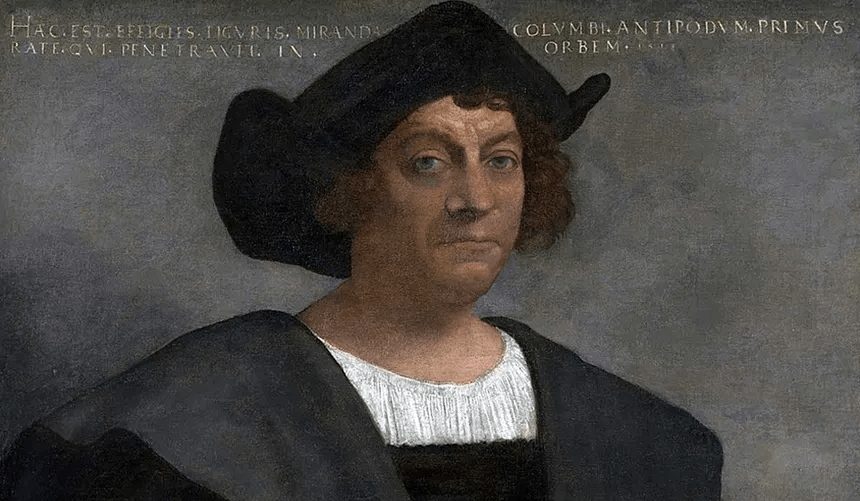
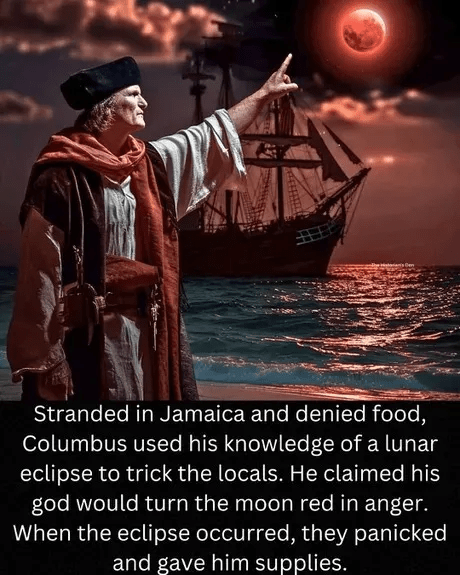
To do a nutshell recap regarding the voyages of Columbus, his first involved taking 3 ships with 2 coming back, and having an overall positive experience with the natives of the islands (excluding the Caribs). He came back to Spain (after going to Portugal first), was celebrated for his accomplishments, and went back on a second voyage with more ships and people. The second voyage was to establish trade outposts and colonies. This didn’t go smoothly, as storms and disease was far more prevalent on the journey there, and disease remained rampant during their time on the islands. Columbus eventually went back to Spain, then returned on a 3rd voyage, to basically find that the colonies were in an inferior state due to certain men taking over and doing things their way rather than Columbus’ way; mistreatment of the natives was at an all time high, Columbus had to deal with mutiny and betrayal, and it ended with him getting arrested and sent back to Spain in chains (with his brother). After getting things cleared up with the king and queen, he made a 4th voyage back, which was nothing short of a disaster, as storms basically took his ships out and left him and his men marooned on an island, which they had to survive on for nearly a year before efforts eventually paid off with getting ships to come to their rescue. When Columbus returned from that voyage, he couldn’t do anymore due to his failing health and eyesight. That’s the short version, and there’s a lot of fascinating details to be had about what went on during all those events.
So obviously the controversy around the historical figure himself is a factor. The whole thing that we were taught in pre-high school (back in my day anyway) that Columbus was the guy who discovered America. If by “America” you mean some islands east of South America, then sure, he discovered it. But if nothing else, he certainly established the travel routes that led to the Americas, much to Spain’s jubilation. Regardless of how one feels of Columbus’ contribution to the discovering of America, the main controversy surrounding him applies towards the enslavement of the indigenous populations of the islands he “discovered.” Something that both the main (suckass) Columbus films that came out in the early 1990s cover to varying degrees.
It is argued that Columbus’ villainy in the enslavement of the indigenous is grossly exaggerated. And, if I’m being honest, the most accurate portrayal of Columbus and his accomplishments and endeavors when it comes to film can be found in this miniseries from 1985 starring Gabriel Byrne. It’s not perfect, for 2 main reasons.
#1: they portray him as being anti-slavery. This isn’t accurate. While it may be true that he was against mistreatment of natives (more on that later), he was anything but anti-slavery. This can be demonstrated by his treatment of the Caribs (from the Caribbean), who were cannibals who invaded other indigenous tribes from nearby islands for the purpose of stealing and raping their women, eating their men and children, and enslaving others (see that film Apocalypto from 2006 for an example of this). He came to those islands on his ships, those natives attacked his men, they killed them in retaliation, and brought survivors back to Spain as slaves, which all the natives from the neighboring islands had no problem with whatsoever. Columbus was happy to bring slaves to the king and queen of Spain… so long as they were natives of the unpleasant and violent kind that attacked either the Spanish or other local native tribes Columbus had befriended. As to whether he should be villainized for that, he shouldn’t.
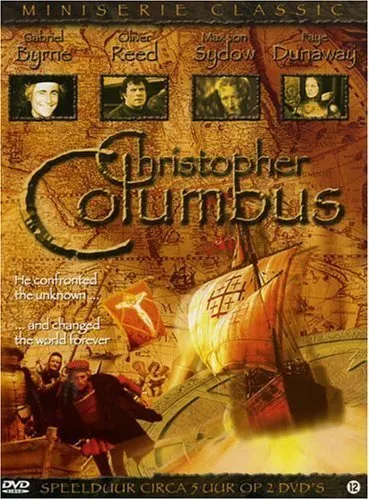
#2: the entire second half of the last episode. Not only does it completely shirk Columbus’ 4th voyage (forgivable considering budget constraints and that nothing significant happened on that voyage regarding Columbus’ accomplishments beyond keeping his men alive amidst being stranded on an island from shipwrecks for nearly a year before help came, and how they came about getting that help, and what they had to do to survive, including against hostile natives), but it also ends with the impression that Columbus’ son (and thus descendants) would inherit the riches to be had from the islands he discovered. Bullshit. The king (the queen was deceased at this point) basically took steps to ensure that Columbus wouldn’t get any profits from all the exploration and discovery he had done, or of the establishment of trade outposts, due to shenanigans and rebranding of what those outposts were (I won’t get into the details here), and thus the same would happen with Columbus’ descendants. Political subterfuge screwed Columbus over, in other words. That, and also he never got to see the queen again after his 4th voyage (historically, she died before he returned). Things didn’t end as happily and optimistically for Columbus as the miniseries would lead you to believe.
The book I read that goes into details for much of this is Columbus and the Quest for Jerusalem, by Carol Delaney. Not exactly a title that would draw my interest, as it sounded stupid and sensationalist to me, something to appeal for the niche radical religious crowd. However, the title is quite sincere, and it actual provides fascinating context regarding Columbus’ motivation for traveling to the Americas. A lot of historical fictional film mediums tend to portray Columbus as one who went on this journey of discovery because he had a passion for being an adventurer and a discoverer. Others portray his motivation as wanting the gold and riches to be had from these new lands. In all fairness, the latter is a more accurate portrayal. However, the reason for wanting gold is often left out. Columbus wanted to sail across the sea for the purpose of reaching the opposite end of the continent of Africa (or possibly even Eastern Europe) for the purpose of having an alternate route for making contact with the Khan of the Mongols (as Marco Polo did, establishing a trade route between the Mongols and Italy, though it’s ironic that Columbus was born Italian, but raised in Spain) so as to establish an alternative way for trading and getting gold from them. But he didn’t anticipate that another continent would be in the way of that westward journey (as he underestimated the circumference of the globe) and ended up coming across islands off the Eastern coast of the Americas. He still hoped to gain gold from those natives. And the reason for wanting that gold was for the purpose of financing another Crusade against the Ottomans/Muslims in order to retake Constantinople, which would (according to religious prophecies and such) bring about Jesus Christ’s return to the world. The book itself delves into the common mindset that many had back then who were of a Christian mind, as Columbus was, and why they would have that mindset. Piety is a trait less whites tend to have these days, myself included, so it can be difficult to comprehend without having reminders as to how things used to be in those days, as the book is gracious to include. After all, it’s Columbus’ entire motivation, not greed.
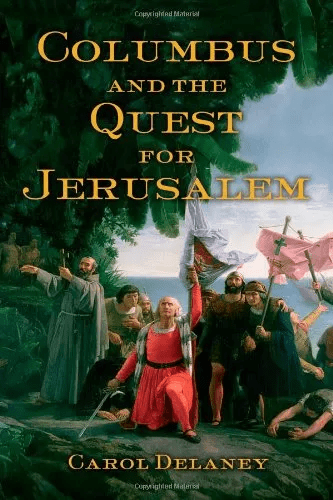
Anyway, what initially led me to reading this book was to gain insight into the subject as to whether Columbus should be viewed as a hero or a villain. While the book claims to take a neutral stance on Columbus and his actions (taking into account the time period and context), by the end it came off as having a more positive stance towards him, while still acknowledge certain faults and unknown variables regarding his motivations for certain situations; such as how much he really loved his first wife, if he married her for convenience because she inherited maps from her father that Columbus wanted to use to help him chart his way of navigating the world, how he actually felt about her death when it happened, how much he really loved his family and how he prioritized them (or didn’t) compared to his “quest,” etc.
The primary topic when it comes to viewing Columbus as a monster is with regard to the natives of the islands he discovered (for Spain), and the treatment they received from him and the Spanish. The thing is, Columbus was above-average when it came to moral conduct around these people compared to just about everyone else. Aside from the treatment given to the Caribs mentioned earlier, the indigenous abuse primarily came from figures like Pedro Margarit, the hidalgos, Francisco de Bobadilla [uncertain if there’s 1 or 2 “L’s” in that name], and Francisco Roldan. Much of the crimes they committed against the tribes have pretty much been flung upon Columbus’ shoulders, even though Columbus tried what he could to right their wrongs and give the natives more fair treatment; which he hardly had the time for because the bulk of his time was spent more on sailing to other islands in search of gold and the continent that would lead to the Khan (the latter of which was impossible) instead of managing the colonies. The men he left in charge of managing the colonies ended up mismanaging them and becoming corrupt.
As for Columbus wanting to “subjugate” the natives, often interpreted as enslaving them… that depends on how you look at it. He wanted them subjugated to the rule of the monarchs of Spain as much as he would any other place. The author Delaney made this statement on that subject:
“Columbus’s primary intention was that the natives should be employees of the Crown, not slaves” — p.142, Chapter Six: Triumph And Disaster
Not to mention that Columbus traded with the natives rather than just flat-out stole from them. In fact, he would punish (and in some cases execute) certain Spanish people for crimes they did against the natives. So while it may be true that he did enslave some natives (the Caribs aside), it was primarily in response acts they did against the Spanish. And by acts, I mean murder (don’t fall for the same lie that is fed to us Americans regarding American Indians, not all of them were peace-loving hippies who never did any harm to anyone ever, there were some who were just as bad as the worst of the Spanish). The whole idea that Columbus was anti-slavery as portrayed in the 1985 miniseries is laughable. Not to mention the miniseries portrays jews the same way.
On that note… yeah, there is some semitic history to be had here on this topic. This one scene from the show with this line from the historical figure Jose Vizinho (played by Raf Vallone), advisor to King John II of Portugal, raised an eyebrow:
https://odysee.com/@theanomaloushost:7/Christopher-Columbus-clip:2
“As a jew, I have my own reasons for wanting Europe to make a new beginning. But it is more than that. We must break out of this narrow cage where we have fed on each others’ blood for more than 20 centuries!”
This is a rather unsettling line if you know a few things regarding how jewish power and influence expanded upon the settling of the American colonies (see Warstrike Episode 102 for some details on that). Which makes it also peculiar that Luis de Torres, also a jew, was among those on Columbus’ first voyage, acting as a translator for the indigenous peoples on the islands (which he apparently could do to a limited extent). It also makes me speculate on him possibly being a factor on how badly things ended for those left behind on the first voyage. For those who don’t know, one of the 3 ships Columbus had sailed to the Americas on the first voyage (Nina, Pinta, Santa Maria) was basically wrecked; since they couldn’t take everyone back, Columbus had left around 40 men on one of the islands to establish a fort, and keep things running and peaceful until Columbus could get back to Spain and then return to bring them back, which would take about a year. Luis de Torres was one of the men left on the island. When Columbus got back, all the men were dead. According to the natives, the Spanish had been mistreating them via pillaging their villages, raping their women, among other things. So they retaliated and killed them all off. Speculate as you will regarding how that went down based upon the individuals left behind. Anyway, upon learning this, Columbus kept things peaceful between the natives and the Spanish he had brought with him on the second voyage, in spite of the Spanish wanting to retaliate against the natives for the massacre.
https://odysee.com/@WarStrike:a/Episode102:d?r=H75LqY55v9B8ECSaaSJcRoip16YMuf8v&t=8665
The miniseries portrays the jews in a positive light, obviously, even going so far as to heavily imply that they were against slavery (laughable at best). But it is worth mentioning the reason as to why jews were being booted out of Spain (and looked upon unfavorably). When Constantinople was taken by the Ottomans, and the Holy Sepulcher burned to the ground, it was alleged that the jews not only assisted in having the Ottomans take Constantinople (in order to have more profitable opportunities when it came to trade routes opening up for them from this turn of events), but also encouraged the Ottomans to burn the Holy Sepulcher (because the jews hate Jesus). This allegation was enough to lead to the Spanish Inquisition, which went after both muslims and jews, forcing them to either convert to Christianity, or deport, or die. Because it was demanded that there be only one religion to keep Spain united and strong, Christianity (or at least some form of it, there was some infighting going on that led to multiple popes existing at once and one being considered the true pope while the other wasn’t, but that’s beyond the scope of this topic, and more relevant to the adventures of Marco Polo). So the Inquisition was intended to enforce that. Of course, it got corrupted later on, but that was its initial intent. Anyway, this led to the persecution and exile of many jews, while some stayed and converted (ie pretended to be Christian).
Edit: Ah right, and a funny bit of trivia. After Columbus returned from his first voyage, one of the rewards he received from the monarchs was a house property that once belonged to a jew prior to him being booted out of Spain due to the Inquisition. Probably contributes a bit towards jewish resentment of Columbus and the holiday named after him.
The miniseries also fails to mention that jews of the Dutch East India Trading Company were the ones that got slavery started, which led to the import of African slaves into Portugal (among other places), which is why I find it laughable that Vizinho is portrayed as being against slavery. The show wants to take the position of slavery being a bad thing (which it was), but the way it goes about doing it via shame tactics isn’t historically accurate. But, it could’ve been worse; it could have gone all Steven Spielberg’s Amistad on us and blamed white people for slavery.
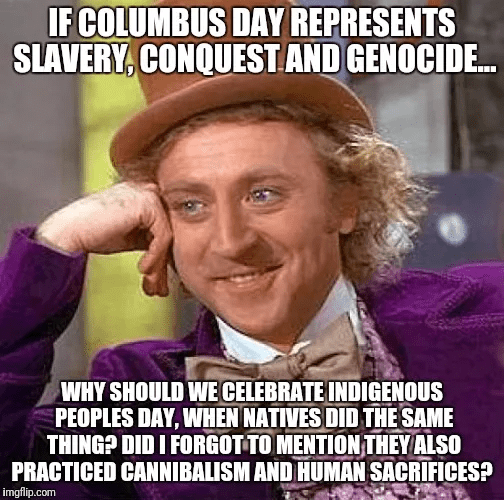
So my point to all this being, if you want a more fair and informative analysis of Columbus, go read Columbus and the Quest for Jerusalem. Highly recommended. If you want to watch a media version of Columbus, go watch the 1985 miniseries starring Gabriel Byrne. It may have flaws, particularly with the last episode, but it’s still quite good, accurate, and the best thing we’re probably ever going to get on that historical figure in media form. As for whether Columbus Day should be celebrated, I think it should be… in Spain, or by Spanish and Italian people in the Americas. Personally, I do find him to be an exceptional individual who pulled off feats that no one else could have, particularly with his sailing and navigational skills. He should be recognized for such. But then again, so should Neil Armstrong and Edwin “Buzz” Aldrin, but I don’t see any fucking holidays named after those guys or their accomplishments; which would likely receive forms of controversy of their own by people bringing up fake moon landing theories and such.
Fuck the holidays. Keep it cultural and traditional among your own people.
PS: Though now that I think about it, that’s rather ironic, considering that Columbus, an Italian, immigrated to Spain and accomplished all this. That aught to throw both pro- and anti-immigration supporters for a loop. You could bring up examples of what he did for Spain vs. what he did for the Bahamas to screw with each side accordingly, leaving out some context and grey areas for the sake of gaslighting them to get a trollish chuckle.

