
Rated: 5 / 5
Sometimes, the best way to know how far I’ve gone with changing my tastes, with gauging if I’m going too far down a bad/good path of interpretation of emotional reaction, is remembering how I reacted to films back when I was a pre-teen. King Kong was one of my favorite films back in the day (alongside Robocop, The Terminator, The Dark Crystal, and Beastmaster; guess my tastes haven’t changed that much according to my top 50 films list). I still remember my thoughts of watching it back then. It went something like this:
Boring. Where’s the action at?
It’s still boring.
BORING!
Oh cool, natives with cool looking clothes and stuff on their face.
Wow, look at that door and all those people.
Holy moly! King Kong!
Whoah! Dinosaurs!
Whoah, all those guys falling off that log!
AAhhhhhhhhhh!!! Kong is fighting a T-Rex! This is the greatest movie in the world!

Simple mindset for a simple youth in simpler times. I had it on a recorded VHS tape (and still remember a couple points where there were imperfections on the recording, plus a commercial for that movie Splash that came afterwards. I still remember it being on a VHS tape that had both this, and The Terminator, recorded on it (hence why I ended up watching both; Terminator preceded Kong). I would always fast-forward through the first act, and watch it once they arrived on the island. Because, you know, back then with my attention span of want for spectacle and action, I wanted to get past the “boring” parts.

Nowadays, I have a greater appreciation for the first act leading into the (nearly) nonstop action that takes place during the last two-thirds of the film. Primarily because this film shows an amount of self-awareness that astounds me. Just the first line uttered: “Say, is this the moving-picture ship?” This film starts out by letting the audience know that it knows that it’s a movie prepping to entertain them. It never breaks the 4th wall to do this, but the dialogue is a consistent “hint, wink, nod, nudge” style. Some would call this foreshadowing in some cases, with Denham getting Darrow to scream at the sight of some monster. In several regards, foreshadowing is correct.
Driscoll: Think I’m going to fall for a dame?
Denham: Never knew it to fail. Some big hard-boiled egg gets a look at a pretty face, bang, he cracks up and goes sappy.
Driscoll: Now who’s going sappy? Listen, I haven’t run out on you have I?
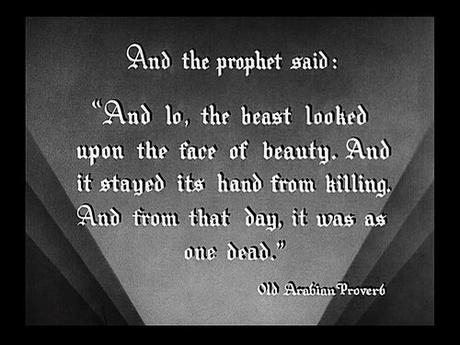
Denham: No, you’re a pretty tough guy. But if “beauty” gets you… […] It’s the idea of my picture. The beast was a tough guy too. He could lick the world. But when he saw “beauty” she got him. He went soft, he forgot his wisdom and the little guys licked him.

But in other cases, the film is clearly having fun with itself basically telling the viewer that they’re going to be in for an adventure film.
Denham: Listen, I’m going out to make the greatest picture in the world. Something no one has ever seen or heard of.
Come now, who wouldn’t think this movie is talking about itself with dialogue like that? It’s like it’s still promoting itself, telling the viewer that they’re going to witness they greatest spectacle man has ever created. But unlike most films, this is one that can back up it’s claim, and deliver on it. And it really helped those who were suffering through the Great Depression (not that there was anything “great” about it; just call it the Miserable Depression). At least for a while, until the Hay’s Code came around and fucked this movie up with its censorship (worse than the censorship we faced via the MPAA with a respectable amount of films in the 90s, nevermind children’s television imported from Japan during that time). But I don’t want to get into that here. The point is, this is a movie that’s having fun with itself, and it wants the audience to have fun along with it.

I am interesting in touching on the subject of the film predicting how dangerous of a place New York would get to be:
Englehorn: But it’s a different thing taking a girl into danger.
Denham: (sarcastically) And I suppose there’s no danger in New York? Listen, there are dozens of girls in this town tonight that are in more danger than they’ll ever see with me.
Driscoll: Yeah, but they know that kind of danger.
Heheh, until they bring a different type of gorilla over from another country, then New York will be of a different type of danger than they’re used to that they’ll have to adapt to. A once great city, of a once great civilization, deteriorated. Speaking of which:
Denham: Built so long ago that the people who lived there, slipped back, forgotten the higher civilization that built it. That wall is a strong today as it was centuries ago. The natives keep that wall in repair. They need it.
Englehorn: Why?
Denham: There’s something on the other side of it. Something they fear.
So even a primitive civilization knows of the importance of building a wall around their borders to keep dangerous intruders out. That is, until outsiders showed up, caused Kong to break through it (guess it wasn’t that strong), and then tear the doors out to use as a rafting for sailing Kong back to New York (it’s fun to imagine that’s how they did it). Though this does beg the question as to why the wall would have doors that big anyway, which would allow giant monsters to get through. I mean, if the doors were primarily for human beings… It does make you wonder if the civilization of that island in its prime had a use for having monsters move through those doors in a controlled manner, and what caused them to regress. Interesting stuff to think about that the movie doesn’t need to answer.
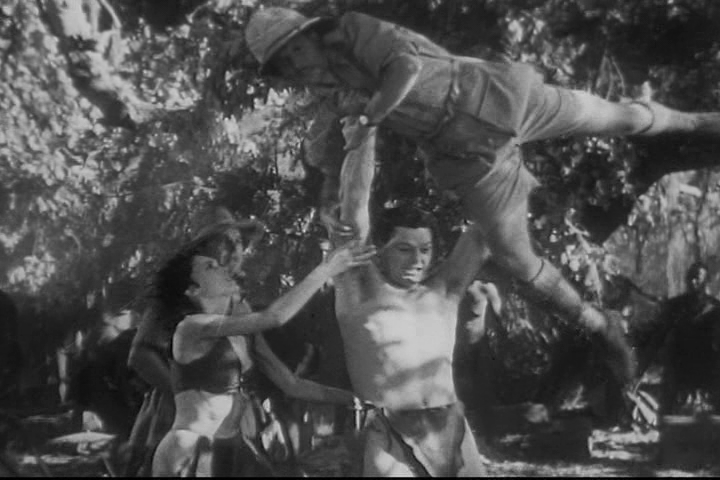
There’s also a little something else about films from this time period that fascinate me, that I wish films made afterwards still did. It’s how non-judgmental they come off when it comes to the characters. For instance, it’s clear that Carl Denham is fanatical about making films under dangerous circumstances to the point where it endangers lives, but the film doesn’t use any form of manipulation to indicate that the viewer should hate the man for it. No musical cues, no evil looks from Denham, no third party comments or remarks that are blatant about it (of course some are made about him being a bit certifiable and risky; otherwise you could argue the film is doing the opposite and trying to praise the man for his qualities). No lingering camera shots on his face at certain points to indicate this one way or the other. The film doesn’t use any emotionally manipulative tricks that I’m aware of when it comes to how he is to be portrayed. It just simply builds him up to be an adventurist and fanatic when it comes to making films, but who has a good head on his shoulders and is sensible enough to take precautions and safety measures. A more radical example of this non-judgmental style can be found in the movie Tarzan and His Mate (1934), where Clayton is clearly shown to be a jealous/envious individual who is willing to kill Tarzan in order to have Jane, but the movie surprisingly doesn’t utilize any film-making tricks to emotionally manipulate the audience after-the-fact into hating the guy beyond just showing his actions. In fact, you could say you become sympathetic towards him later on, as just a guy who wants to be with Jane. It’s these aspects in those films where they don’t make any effort towards vilifying a character that I wish was seen more in movies made since.
Another example of this can be found with Jack Driscoll. When they come to the island to rescue Anne, he’s the only one who looks through those big doors to catch a glimpse of Kong. Denham asks him, “What did you see?” after seeing his shocked expression. Driscoll ignores the question, and just tells them to get the doors open so they can go through to rescue her. Not wanting to tell them of the danger they are up against, because he is that fanatical about rescuing her at any cost (because he’s in love), arguably willing to do as much to get Anne back as Clayton was to have Jane. So when a bunch of guys get killed in the rescue attempt, there isn’t any shots of Jack looking regretful or saddened about all that, as if Jack doesn’t feel responsible for their deaths. Another instance of the film not doing anything to manipulate the audience into feeling one way or another about a major character. Plus it also mirrors Kong being fanatical about getting Anne back himself later on.
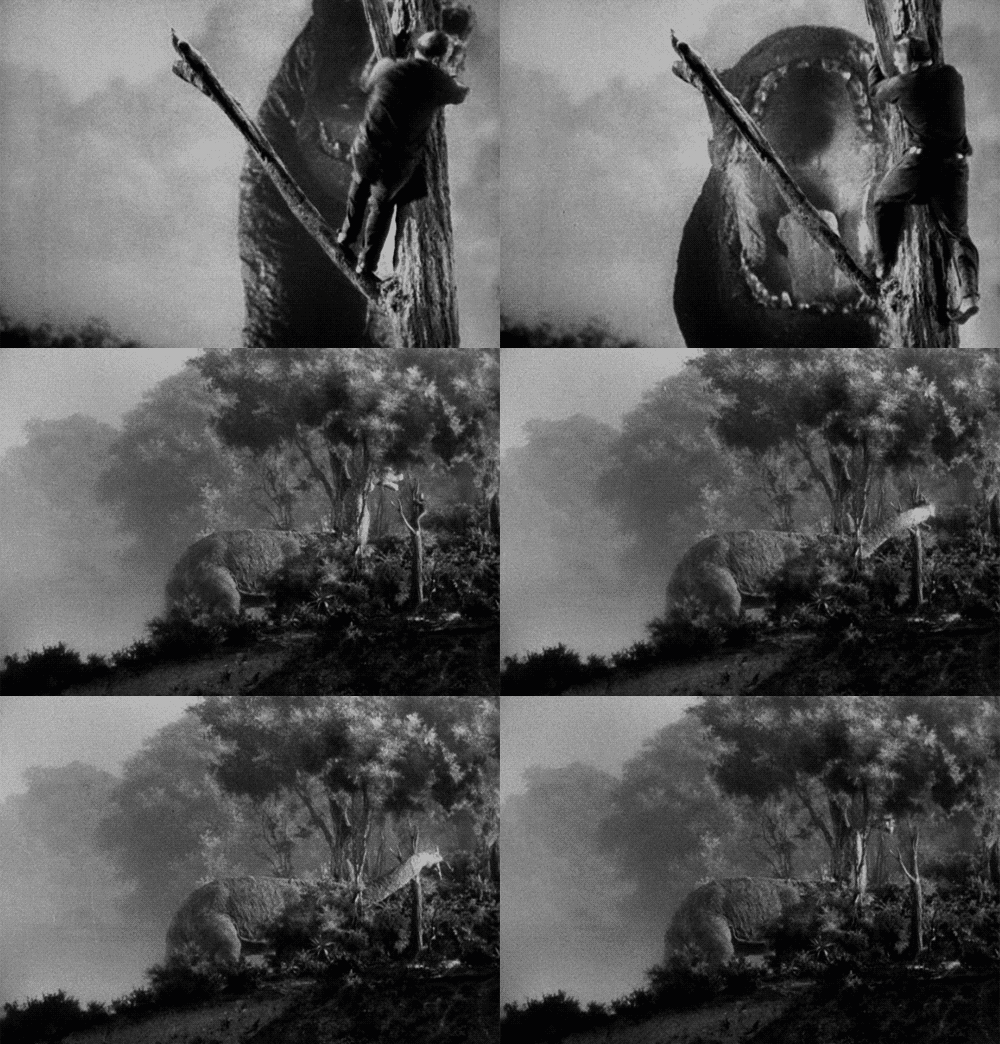
That all being said, the music cues did provoke emotion on a few things. Aside from the moments with Anne and Kong, the musical cues were a bit on the melancholy side when it came to the end of the encounter with the Stegosaurus on the island (like it was a sad thing to see them kill it). Of course there was also Kong’s final moments having their own melancholic cues, but the Stegosaurus one in particular stood out to me. The one significant moment outside of Kong’s death where it implied tragedy due to what the humans were doing to this giant monsters. A part of me thinks this is to reflect the tragedy that would ensue when Kong starts wrecking havoc in New York, particularly with the train, and the woman in the hotel, to reflect the havoc the men caused to the monsters on the island. But I also think that’s reaching a bit, considering they only killed one dinosaur. In any case, it’s a nice touch for the film to show that it’s a sad thing to see this titans being cut down by beings smaller than they are. But that’s part of the theme, how such a small thing tough guys tend to look down upon like love can eventually bring them down.

To address the elephant in the room, some would say this film is an allegory for racial relations. The popular position being Kong represents the black race; which has plenty of implications. From their desire to have a white woman, the racial clashes between blacks and the white civilization, the tragedy of his demise being a metaphor for the violent outcome of a racist society. Those are the most extreme examples, and plenty of people looking to be outraged, or raised to be easily offended, will be obliging in preaching this manner of viewing the movie, which as far as they’re concerned is the only way the film should be viewed. But to quote Neil Gaiman: “If someone tells you what a story is about, they are probably right. If they tell you that that is all the story is about, they are very definitely wrong.“

To me, Kong represents our most primal urges fully unleashed, which people generally to keep repressed and in check in order to keep civilization functional and growing (and improving). His desire for Anne once he sees her correlates with Driscoll’s love for her at that point. Both are fanatical about having her, and just as fanatical for wanting her back when they lose her. Even Denham has a fascination towards her due to her looks, but it’s less personal and more about getting her on camera. You know, for show business. And nothing sells more for show business than putting such a primal force on display. Human beings, after all, are greatly entertained by fights, sports, a show of strength, and sexual prowess (ie porn), even if they’re ashamed to admit it. In other words, we have a thing for exploitation. The problem is, such raw primal force cannot be contained or controlled; it needs to be free. It cannot hope to be restrained entirely against its will (see Jurassic Park for another such example). And once such primal force is unleashed upon a civilized society, the only thing to do to stop the havoc it wrecks is by killing it off (after it has ascended to the top of the world, ala Scarface). It’s a tragic thing of course, as one can’t help but have some admiration for that primal force in spite of any and all destruction it causes; because a bit of that primal nature is within all of us. Some are just better at keeping it restrained and exercising more self-control than others.

The yarn is a “beauty and the beast” story, done in an entirely different setting, with much of your sympathy going to the beast. Even though he kills off anything and everything that seeks to intrude on his romance with the beauty, when he is finally killed at the top of the Empire State Building in New York, by thousands of bullets from airplane guns, you almost have to choke down a tear for his passing.
— Staff review from February 14, 1933
 The Anomalous Host