
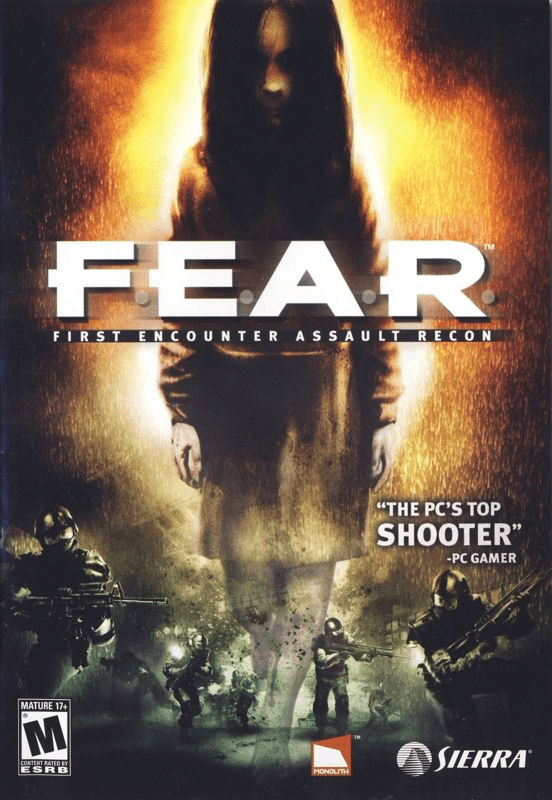
Rated: 4 / 5
“He deserved to die. They all deserve to die.”
A game that gets more depressing the more you get into it. Looking into the details and story with each playthrough, catching onto more subtle details. A game where you are pitted against your own family, brainwashed into being this way via gaslighting; being deprived of memories and knowledge that would give more context into your current situation that may make you second guess your priorities and overall mission.
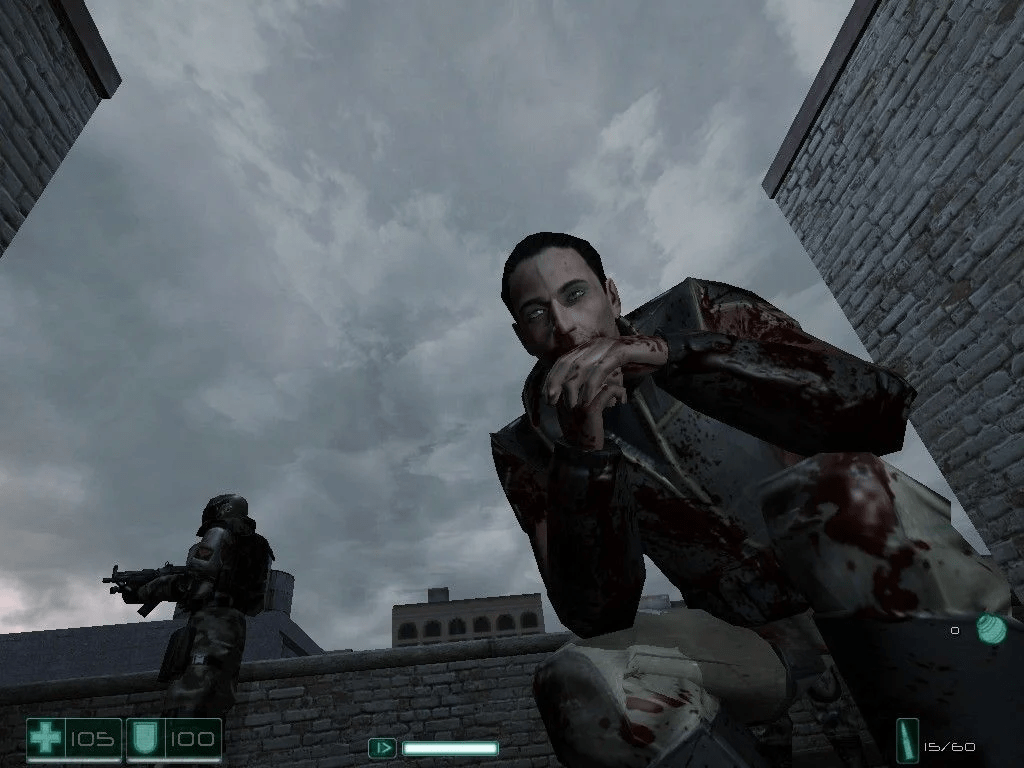
Sure the gameplay is fun and holds up to this day. The renown enemy intelligence giving it solid gameplay. The gunplay and slow-motion solidifying the experience. If there’s anything that can be said against it, some dated graphical aspects aside (which is nitpicking), it’s that the levels are on the monotonous side in terms of appearance. In terms of design with respect to running and gunning and platforming, the levels are fine; but the looks of half the levels are very similar. Office and warehouse spaces. It goes with some thematic aspects of the game, plus it didn’t bother me all that much, even on repeated plays. But it is worth noting.
Gameplay aside, the story and character aspects get rather deep. In particular, I began to empathize with Paxton Fettel with regard to his famous line, “They all deserve to die.” His memory becoming a jumbled mishmash between his own and Alma’s. But both are tortured souls in their own way, both experiments of the same government and corporation. Fettel being Alma’s son, and having a psychic connection with her. Her being a tortured spirit whose pain and anger become an unavoidable influence on him. Both raised in an environment of cold and pain. It’s inevitable Fettel would eventually lose his mind and go along the same trajectory of wanting revenge against Armacham Technology Corporation (ATC) for the pain they’ve caused Alma. Though Alma has been driven insane by anger, and is incapable of directing her anger at specific individuals, thus she uses Fettel to strike out at anyone and everyone involved with ATC; even those who not only weren’t responsible, but were set on going against ATC for their past deeds (Harlan Wade’s daughter, Alice, being the main unfortunate case). I can be sympathetic to Fettel and why he does what he does, especially since he was raised and used to be a weapon all his life, he’s just turned on those who raised him when he gains Alma’s perspective and influence, arguable to a degree of mind control. Just as Fettel is mind controlling all those Replicas (clone soldiers, who could possibly be cloned after him and/or Point Man, but that’s a stretch). Just as Point Man is being controlled because of blocked memories and withholding information about his past, and also full context of his present circumstance. Something which may could’ve potentially made him side with Fettel. Just as a populace can be controlled in a manner similar to Point Man against certain groups and organizations.
This form of psychological manipulation can cause one to not only fight against those he maybe shouldn’t be fighting against, but also to fight against other family members. Because, in a sense, all those Replicas you (as Point Man) gun down are family members in a twisted sense. The only time this isn’t the case are the brief intervals where you are shooting against ATC soldiers, who have been shown to kill their own people for the sake of covering up the corporation’s prior unethical experiments. But regardless, do they deserve to die anymore than you, or Fettel? Or even Alma (even if she is technically dead, just not in spirit)? Because it’s not as if Alma isn’t also killing people who don’t deserve to die, who had nothing to do with the experiments. Because pain and suffering from the past can drive one mad, lashing out at anything and anyone even remotely associated with the people who caused harm in the past. And a mad dog should be put down, regardless of intent.
Which brings me to the other thing I don’t really like about this story, and it’s more of a gripe I have with the genre than with just the game itself. I’m not a fan of vengeful spirits, especially Japanese-inspired ones. They have a bad habit of getting overpowered and capable of causing mass deaths over some incident in the past that is miniscule by comparison to the spirit’s deeds. And the spirit is invincible and un-killable. I call this trope bullshit.
Regardless, the gameplay is still solid. The story has some nice depth to it (which is only apparent if you look into the details, because this was made back when games knew they were games and emphasized gameplay over everything else, and didn’t try to pretend to be a glorified movie; unless it was Metal Gear Solid). The ending is appropriate and raises interesting questions. Such as now that Alma knows you are her son (you being less susceptible to psychic influence made that difficult for her to figure out until the end when Point Man comes upon this revelation himself), what kind of reunion does she have in mind now that she’s done sending raging spirits after you? How strong and lasting are her powers? Will you and her both go after the heads of ATC? The game was building up to this kind of ending, and it’s fine that it ends on that note.
As for the sequels, well… you’re better off not playing them, at least not if you care that much about the story. Because all of them, even the Extraction Point expansion, don’t do the first game justice on just the story, characters, and themes alone. F3AR flat out sucks (though there is potential with the game mechanics utilized in it). FEAR 2, it’s a decent game, just a bad sequel.
As for Extraction Point, there’s been a growing movement declaring this as the definitive end to the original FEAR, an end that the other official sequels ignore. Having replayed it and the first game, I can say with confidence that this is a misguided view. Bringing Fettel back was a big mistake. Having him act more aggressive and angry is out of character for how he was in the original game (a man driven to madness, but his anger was more reserved and driven by Alma rather than himself, like he was more of a semi-willing puppet). The fact that Point Man wiped out at least half the batallion of replicas by the end of the first game alone should at least put a damper on the Replica army’s capabilities in terms of numbers, let alone the body count by the end of Extraction Point. The dual personality of Alma (a good side and a bad side) kills anything to be had regarding her reunion with Point Man, her son (and how she will treat him compared to Fettel). The gameplay and level layouts are fine for the most part; in fact some of the shootouts are probably better than some that were in the original game. The difficulty is amped up, but also to a point where the deaths feel cheap in a couple instances (you round a corner, even cautiously, and get one-shotted by a guy waiting for you with a shotgun; in a position where it’s scripted for this replica to be waiting for you). It’s worthwhile for the gameplay aspects, and some horror elements done right, but it’s not what I personally consider a respectable sequel (let alone conclusion) to the original game.
F.E.A.R. comes from a time period where games were continuing to push the envelope, both in graphics and gameplay. So I find it regrettable that I took it for granted that things would continue to improve from there, particularly when it comes to enemy NPCs that act intelligently against you, but don’t come off as cheap or unfair in how they do it. This game ended up being where the industry peaked when it came to enemies acting intelligently against you in the first-person-shooter genre. Not to mention, sequels aside, and that Trepang2 game (which has lesser quality AI), nothing else incorporated the cool slow-motion mechanics to highlight your reflexes. This ended up being one of the last great FPS games to be made that pushed the FPS genre as far as it’s ever gone (in this case for enemy intelligence), the others being Half Life 2 (for the physics), Thief (for stealth), Halo: Combat Evolved (semi-open world, with a variety of weapons and enemies, being able to hijack ground and flying vehicles, offering a plethora of ways to tackle enemies), and Bioshock and Deus Ex (for RPG elements). Virtually every other FPS game that came out that wasn’t based around some niche gimmick (like Portal) has been riding off the backs of those games, and hasn’t made any significant progress. In fact, most aren’t even in the same league as those games. Gaming really did star gradually dropping from its peak since between 2008-2013, at least as far as mainstream releases are concerned. If that’s taught me anything, it’s that you shouldn’t take something for granted. If you have a good thing, don’t ever assume it will get better. You can hope for that, aspire for that, even get involved in projects that strive to achieve that; but don’t take it for granted that things will continue to climb to greater heights. We’re already having enough problems preserving foundations amidst a crumbling industry, let alone society.
PS: Oh right, and if you want to play this game today, I strongly recommend the Echo Patch for making it more compatible with modern hardware.
 The Anomalous Host