
Rated: 2 / 5
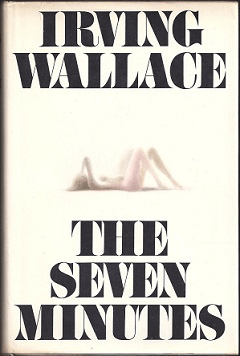
I bought this book on a whim years ago, and only got around to reading it recently. Naturally, anything on the topic of censorship tends to interest me. So a book that’s about censoring an erotic novel, and prosecuting those who sell it, and the court fight defending the right for the book to exist and be read, would have my attention. The main thing I was hoping to get out of this is memorable (if not) preachy speeches regarding the pros and cons of censorship (preferably the former).
The first half gave me what I wanted for the most part. Preachy speeches such as:
“[Sophisticated readers] don’t give a damn about obscenity if in the end they have some great reading that gives them new insights and understanding into human nature.” — p.8
“[…] how can you define a notion [obscenity] so nebulous that it resides not in the thing contemplated, but in the mind of the contemplating person?” — p.32
“Poke any saint deeply enough, and you touch self-interest.” — p.99
“[we must prove that he] did not write this book for commercial reasons but wrote it for artistic and moral reasons, so that it has necessary social importance.” — p.138
“Censorship of books, urged or practiced by volunteer arbiters of morals or political opinion or by organizations that would establish a coercive concept of Americanism, must be challenged by libraries in maintenance of their responsibility to provide public information and enlightenment through the printed word. […] Libraries should enlist the cooperation of allied groups in the fields of science, of education, and of book publishing in resisting all abridgment of the free access to ideas and full freedom of expression that are the traditions and heritage of Americans.” — p.159
“Selection [of the best books based on the presumed intent of the author and his sincerity of purpose] begins with a presumption in favor of liberty of thought; censorship begins with a presumption in favor of thought control.” — p.162
“‘If language is not used rightly, then what is said is not what is meant. If what is said is not what is meant, then that which ought to be done is left undone; if it remains undone, morals and art will be corrupted; if morals and art are corrupted, justice will go awry, and if justice goes awry, the people will stand about in helpless confusion.'” — p.419, quoting Confucius

Unfortunately, the way the plot is carried out is done in a manner I’d like to call “taking the easy way out.” It’s the same old bullshit you would see in a typical B-movie from Hollywood. One side is clearly right, the other side is clearly wrong (in spite of some moments in the novel where the author at least makes an attempt to let the opposition, who is in favor of censorship, have a fair say). And the anti-censorship side is always struggling with their case, confronting corrupt corporations and politicians who stonewall or sabotage their side; thus making them even more sympathetic to the average reader because the cause they stand for isn’t good enough. The bullshit tropes used to create drama. To me, this is a sign that the author doesn’t have faith in himself to create enough intelligent dialogue to make the readers contemplate these compelling ideas on the subject of censorship and obscenity, and/or doesn’t have enough faith in his readers to see things the way he wants them to be seen unless he utilizes these tropes. Which to me is an indication of, “presumption in favor of thought control.” Fucking hypocrite. If he wanted to handle this subject with the wit that it deserves, he wouldn’t have pulled the twist that he did at the end. He would’ve just had the defense end things with strong points regarding why censorship (at least in this case) shouldn’t be done. With the defense not having the author to give out his reasons for writing the novel; they would’ve had to make the anti-censorship case without it. Which would be far more powerful and timeless. After all, do we not live in times where censorship is called for past works made by those who no longer exist to defend their own works?
These issues get worse as the novel goes on, to the point where it becomes a half-assed detective story that supersedes the whole censorship subject. Along with the whole romance side-plot.
Back to the preachy speeches and the author making an attempt to give the pro-censorship side a fair chance. This accumulates in the district attorney confronting the main protagonist, and them getting into a back-and-forth argument. And the closing remarks given by the protagonist is bordering on complete bullshit. This smug fuck saying no amount of censorship, ever, in any circumstance, should ever be done. Where the hell was the topic of classified government/military documents? Normally I’d bring up the subject of The Anarchist Cookbook by William Powell, except that was made a couple years after this novel was originally published, so it gets a pass on that. But still, one of the prosecutors could’ve brought up the subject of a book teaching someone to do something illegal. In the novel, it’s all about a book possibly causing someone to get horny and desire to rape someone. So why not be analogous about it and state that a book teaches someone how to construct a weapon for the purpose of murder? How to carry out a bank robbery? Anything like that. But unfortunately, this novel, in spite of its length, didn’t ever go into those topics. Because, shock of shocks, it would’ve made a legit case for censorship. Granted, the defense could’ve argued that this does not equate to the content of The Seven Minutes book, and they would be right, but we never got to have that discussion happen in this novel.
The warning signs that the book wouldn’t be up to my standards were hinted at earlier on. Particularly when the book indicated admiration for psychoanalysis (and thus that overrated hack Sigmund Freud), but I was willing to give it the benefit of the doubt considering the time this was published. Well… that didn’t go as well as I hoped. If you want to know why you should be skeptical of psychoanalysis (if that subject isn’t considered too quaint in the present time), I recommend the book The Culture of Critique by Kevin MacDonald, which has an entire chapter dedicated to psychoanalysis, and more-or-less destroys its credibility.
But aside from all that, there’s also all the opposition being white guys (and one blonde white bitch), and all the good guys having a few non-whites helping along the way, plus some darkies at a loony bin who are as nice and helpful as can be. In other words, some amount of anti-white bullshit.
I’m about as anti-censorship as it gets when it comes to the entertainment industry. But my position comes with caveats. In the case of film, it is right that there should be restrictions on what children should be exposed to (even if what we currently have is an imperfect MPAA rating system); but that shouldn’t come at the expense of what mature adults decide to have themselves exposed to (subliminal messages notwithstanding; that’s another can of worms). I believe we should be able to play any videogame regardless of the controversial content that’s in it (real-life person’s actual address and stuff excluded), but I’ll also acknowledge that retards who are highly impressionable may need to be restricted from FPS games that could make them want to shoot up a school or something; restrictions made that shouldn’t hinder those intellectual enough, and mature enough, with enough self-control, to not be susceptible to such urges (at least not from playing a videogame anyway).
Not having censorship means the civilians are shouldered with the responsibility of handling such freedom, without causing society to fall apart due to abusing their freedoms. If those freedoms are abused, then having that responsibility means society is required (let alone obligated) to punish the abusers and put them in their place, so that everyone else can continue on with enjoying the privileges of their freedom. Having censorship is acknowledging that society (or at least respectable portions of it) are incapable of handling such freedom, and thus should be handled in such a way where they won’t ever be irresponsible with it; and thus are barred from ever enjoying the privileges such freedom would offer.
Now where’s a fucking book, or even movie, that has a nice strong message that goes along those lines, delivered eloquently, passionately, intelligently, and with maturity?
PS: I’ve learned recently that there was a film adaptation of this novel that came out in 1971 (coincidentally when The Anarchist Cookbook was also published). I don’t plan on seeing it.
 The Anomalous Host